Why Singapore
A small market withoutsized leverage.

Singapore's attractiveness is not simply a function of consumer demand. It stems from a combination of digital maturity, regional connectivity, economic resilience and operational efficiency. This is a mix that is difficult to replicate elsewhere in Asia, and only really found in exceptionally mature markets like Japan or Hong Kong.
A regional crossroadsfor commerce
Singapore's value is not its size, but in its strategic positioning and mature, infrastructural openness.
“Singapore is a relatively small market, so outbound expansion is far more significant than inbound. The country works less as a destination market and more as an outstanding platform for global operations.”
Mature-market affluence,near-universal readiness.
These levels place Singapore among the most digitally developed, and affluent, economies globally. For merchants, this means less time creating demand and more time competing for it.
A market that punches above its weight
Smaller volume.Stronger outlook.
On paper Singapore appears modest: 6.1 million people generating over USD 35bn of digital commerce. Its 2024 e-commerce volume is far smaller than Germany’s or Japan’s, yet its growth outlook is stronger than both.
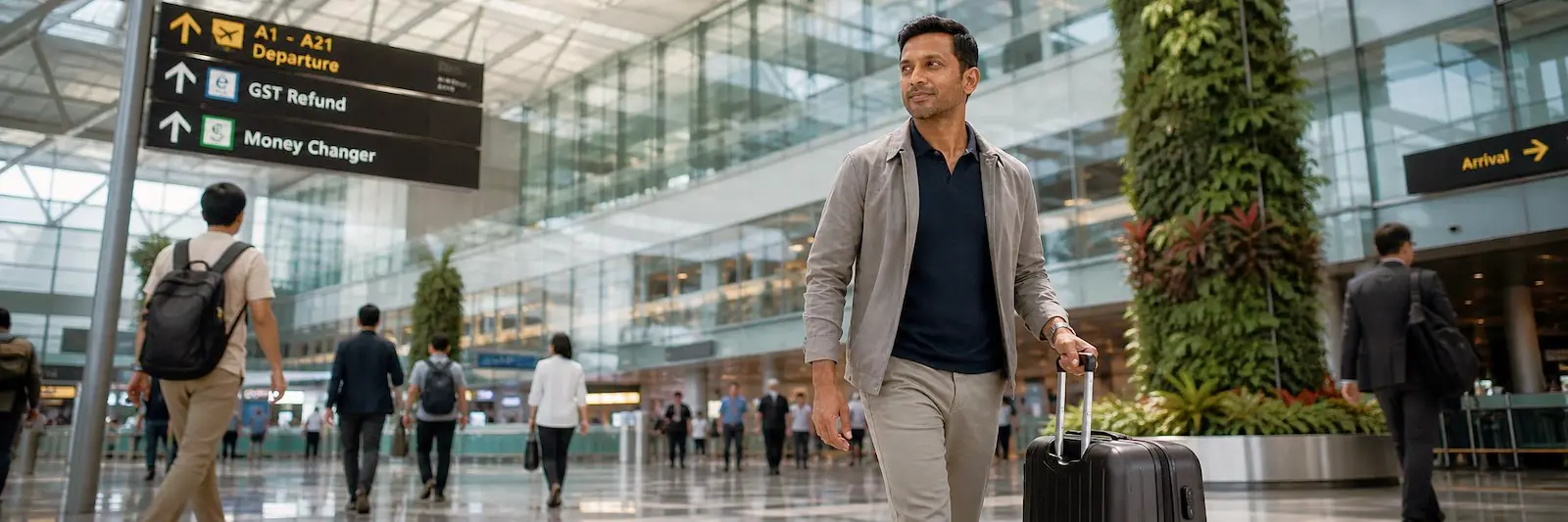
Singapore as APAC's operating base
One hub.A gateway into APAC.
Singapore’s value lies in both domestic demand, and its role as a stable base for regional and cross-border growth.
While Singapore’s domestic market offers meaningful commercial potential, many businesses view the country largely as a platform for growth beyond its borders. Global technology firms, e-commerce platforms, travel companies, SaaS providers and digital service businesses all run APAC operations from here.
The AI start-up founded in China relocated its headquarters to Singapore in 2025.
Amazon opened a second central business district office in 2025 to serve as its Asia-Pacific AWS headquarters.
Alibaba-owned and Singapore-headquartered, using the country as a regional base across Southeast Asia.
Singapore-based, now one of the region's largest marketplace ecosystems.
Economic resilience
Growth you canactually plan around.
Versus 2.0% across advanced economies.
Versus 1.7% for the advanced-economy benchmark.
Sustained government investment in payments and digital infrastructure.
- Fewer structural barriers than larger emerging markets - transparent regulation and deep global trade integration.
- The strategic question is not whether Singapore is large enough, but how effectively it unlocks growth elsewhere.
- Demand already exists; competitive execution decides who captures it.